Industrial Metrology Machines: Precision Measurement Guide
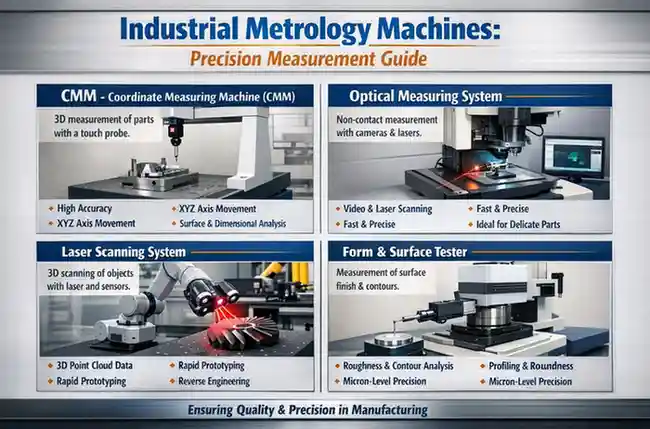
Industrial Metrology Machines: Precision Measurement Guide
In the era of advanced manufacturing and global competition, achieving absolute precision is no longer optional—it is essential. Industrial metrology machines have become the backbone of modern production systems, enabling manufacturers to maintain accuracy, ensure quality control, and reduce costly defects.
This comprehensive guide explores everything you need to know about precision measurement tools, including types, costs, applications, and how they contribute to efficient manufacturing inspection processes and higher ROI.
What Are Industrial Metrology Machines?
Industrial metrology machines are specialized systems used to measure physical dimensions, geometries, and surface characteristics of manufactured components with extreme accuracy. These machines are essential for maintaining tight tolerances and ensuring product quality.
They are widely used in industries such as:
- Automotive manufacturing
- Aerospace engineering
- Medical device production
- Electronics and semiconductors
- Heavy engineering
Importance of Precision Measurement in Manufacturing
Precision measurement plays a critical role in ensuring product quality and operational efficiency. Without accurate measurement systems, manufacturers face risks such as:
- High defect rates
- Product recalls
- Increased material waste
- Customer dissatisfaction
Investing in advanced quality control equipment helps mitigate these risks and improves overall productivity.
Types of Industrial Metrology Machines
1. Coordinate Measuring Machines (CMM)
CMM machines are the most widely used metrology systems. They measure the geometry of objects using probes or lasers.
2. Optical Measurement Systems
Use cameras and lasers for non-contact measurement, ideal for delicate components.
3. Laser Scanners
Provide high-speed 3D measurement for complex geometries.
4. Vision Measurement Systems
Used for inspecting small and intricate parts with high precision.
5. Surface Roughness Testers
Measure surface finish and texture to ensure product quality.
CMM Machines Cost in 2026
The CMM machines cost varies depending on size, accuracy, and automation level.
| Machine Type | Price Range (USD) | Best For |
|---|---|---|
| Portable CMM | $10,000 - $50,000 | On-site inspection |
| Bridge CMM | $50,000 - $200,000 | General manufacturing |
| Gantry CMM | $200,000 - $1M+ | Large components |
| Advanced 3D Metrology Systems | $500,000 - $2M+ | Aerospace & high precision industries |
Key Features of Modern Metrology Machines
1. High Accuracy & Repeatability
Modern systems offer micron-level accuracy for precise measurements.
2. Automation & CNC Integration
Automated measurement processes improve efficiency and reduce human error.
3. 3D Measurement Capabilities
Advanced machines provide detailed 3D models for analysis and inspection.
4. Real-Time Data Analysis
Integrated software provides instant feedback for quality control.
5. IoT & Smart Factory Integration
Enables predictive maintenance and real-time monitoring.
Applications of Industrial Metrology Machines
Automotive Industry
Ensures precision in engine components, gears, and assemblies.
Aerospace Industry
Critical for maintaining tight tolerances in aircraft components.
Medical Devices
Ensures accuracy in surgical instruments and implants.
Electronics Industry
Used for inspecting micro-components and PCBs.
Benefits of Precision Measurement Tools
- Reduced defect rates
- Improved product quality
- Lower production costs
- Enhanced customer satisfaction
- Compliance with international standards
| Metric | Without Metrology | With Metrology |
|---|---|---|
| Defect Rate | 10-15% | 2-5% |
| Production Efficiency | Moderate | High |
| Quality Consistency | Variable | Stable |
Manufacturing Inspection & Quality Control
Metrology machines are essential for manufacturing inspection processes. They ensure that every component meets design specifications and quality standards.
- Incoming material inspection
- In-process quality checks
- Final product validation
ROI of Industrial Metrology Machines
Investing in metrology equipment delivers strong ROI through improved efficiency and reduced defects.
| Metric | Before Implementation | After Implementation |
|---|---|---|
| Production Output | 100 Units | 140 Units |
| Defect Rate | 12% | 3% |
| Profit Margin | 15% | 25% |
How to Choose the Right Metrology Machine
- Determine measurement requirements
- Evaluate accuracy and precision needs
- Consider automation and integration capabilities
- Analyze budget and ROI
Expert Tips:
- Invest in scalable solutions
- Choose machines with advanced software
- Ensure proper training for operators
Future Trends in Industrial Metrology
- AI-driven measurement systems
- Digital twin technology
- Cloud-based inspection platforms
- Smart factory integration
Conclusion
Industrial metrology machines are essential for achieving precision, quality, and efficiency in modern manufacturing. By investing in advanced precision measurement tools, businesses can reduce defects, improve productivity, and gain a competitive edge in global markets.
As industries continue to evolve, adopting cutting-edge metrology solutions will be key to ensuring long-term success and sustainability.
Ready to enhance your quality control processes? Investing in the right metrology machine can transform your manufacturing operations and drive higher profitability.
Comments (3)