Effluent Treatment Reactor Guide for Industrial Wastewater Compliance
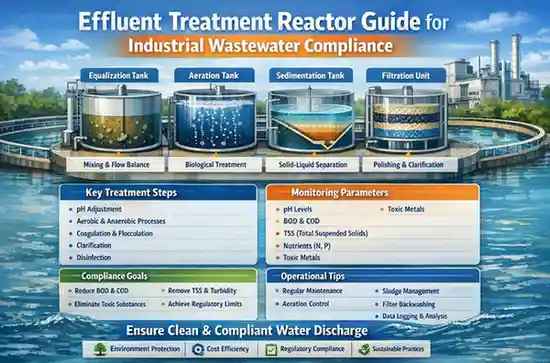
Effluent Treatment Reactor Guide for Industrial Wastewater Compliance
Industrial growth has brought immense economic benefits, but it has also increased environmental challenges—particularly in managing wastewater. Today, regulatory authorities across the globe are enforcing strict environmental norms, making effluent treatment reactors a critical component of modern industrial infrastructure.
This comprehensive guide explores everything you need to know about effluent treatment reactor cost, system design, compliance requirements, and how advanced wastewater treatment systems can reduce operational costs while ensuring environmental sustainability.
What is an Effluent Treatment Reactor?
An effluent treatment reactor is a core unit within an ETP (Effluent Treatment Plant) designed to treat industrial wastewater through physical, chemical, and biological processes. These reactors remove harmful contaminants, making water safe for discharge or reuse.
Industries that heavily rely on ETP systems include:
- Textile and dyeing industries
- Pharmaceutical manufacturing
- Chemical processing plants
- Food and beverage industries
- Oil and gas refineries
Why Wastewater Compliance is Critical
Governments worldwide are enforcing strict wastewater discharge regulations to protect ecosystems and public health. Non-compliance can result in:
- Heavy fines and legal penalties
- Operational shutdowns
- Damage to brand reputation
Implementing an advanced industrial water treatment system ensures compliance and long-term sustainability.
Types of Effluent Treatment Reactors
1. Aerobic Reactors
These reactors use oxygen to break down organic pollutants. Common types include activated sludge systems.
2. Anaerobic Reactors
Operate without oxygen and are ideal for high-strength wastewater. They also produce biogas, which can be used as energy.
3. Moving Bed Biofilm Reactors (MBBR)
Advanced systems that use biofilm carriers to enhance treatment efficiency.
4. Sequential Batch Reactors (SBR)
Operate in batch mode, offering flexibility and high treatment efficiency.
5. Membrane Bioreactors (MBR)
Combine biological treatment with membrane filtration for superior water quality.
Effluent Treatment Reactor Cost in 2026
The effluent treatment reactor cost varies depending on capacity, technology, and level of automation.
| System Type | Capacity | Price Range (USD) | Application |
|---|---|---|---|
| Basic ETP Reactor | Small Scale | $10,000 - $50,000 | Small industries |
| Biological Treatment Reactor | Medium Scale | $50,000 - $200,000 | Manufacturing plants |
| Advanced MBR System | Large Scale | $200,000 - $1M+ | High compliance industries |
| Zero Liquid Discharge (ZLD) | Enterprise | $1M - $5M+ | Strict regulatory environments |
ETP Plant Price Breakdown
Understanding the ETP plant price requires analyzing multiple cost components:
1. Capital Investment
- Reactor tanks
- Pumps and piping
- Automation systems
2. Operational Costs
- Energy consumption
- Chemical usage
- Labor
3. Maintenance Costs
Includes routine servicing and replacement of components.
4. Compliance & Monitoring
Advanced systems include sensors and software for real-time monitoring.
How Effluent Treatment Improves Cost Efficiency
While initial investments may seem high, modern pollution control systems provide significant cost savings:
- Water recycling reduces freshwater consumption
- Energy recovery from anaerobic systems
- Reduced environmental penalties
| Factor | Without ETP | With ETP |
|---|---|---|
| Water Cost | High | Reduced by 40-60% |
| Compliance Risk | High | Minimal |
| Operational Efficiency | Low | High |
Key Features of Modern Wastewater Treatment Systems
- Automated monitoring and control
- IoT-enabled sensors
- Energy-efficient operations
- Compact and modular design
Industrial Applications
Textile Industry
Handles dyeing and chemical wastewater.
Pharmaceutical Industry
Treats complex chemical effluents.
Food Processing
Removes organic waste and contaminants.
Chemical Manufacturing
Manages hazardous waste streams.
Zero Liquid Discharge (ZLD) Systems
ZLD systems are gaining popularity due to strict environmental regulations. These systems ensure that no wastewater is discharged into the environment.
- Complete water recovery
- Minimal environmental impact
- High initial investment but excellent ROI
Compliance Standards & Regulations
Industries must comply with environmental standards such as:
- EPA regulations (USA)
- EU Water Framework Directive
- Local pollution control board norms
ROI of Effluent Treatment Reactors
The return on investment for ETP systems is driven by:
- Reduced water procurement costs
- Lower environmental penalties
- Improved brand reputation
| Metric | Before ETP | After ETP |
|---|---|---|
| Water Usage | 100% | Reduced to 40-60% |
| Compliance Cost | High | Optimized |
| Profit Margin | Moderate | Increased by 10-20% |
How to Choose the Right Effluent Treatment Reactor
- Analyze wastewater characteristics
- Determine required treatment capacity
- Evaluate technology options
- Consider long-term operational costs
Expert Tips:
- Invest in automation for better efficiency
- Choose scalable solutions
- Work with experienced suppliers
Future Trends in Industrial Water Treatment
- AI-driven water management systems
- Smart sensors and real-time analytics
- Decentralized treatment systems
- Green and sustainable technologies
Conclusion
Effluent treatment reactors are no longer just a regulatory requirement—they are a strategic investment for sustainable industrial growth. By adopting advanced wastewater treatment systems, industries can achieve compliance, reduce costs, and enhance operational efficiency.
As environmental regulations continue to tighten globally, businesses that invest in modern industrial water treatment solutions will gain a competitive edge while contributing to a cleaner and more sustainable future.
Ready to upgrade your wastewater management system? Investing in the right effluent treatment reactor today can secure compliance, reduce costs, and drive long-term profitability.
Comments (3)