Reduce Environmental Penalties Using Effluent Treatment Reactors
Reduce Environmental Penalties Using Effluent Treatment Reactors
In today’s regulatory-driven global economy, industries face increasing pressure to comply with strict environmental laws. Non-compliance can result in heavy fines, operational shutdowns, and reputational damage. This is where effluent treatment reactors play a critical role in helping businesses reduce environmental penalties and achieve sustainable growth.
This comprehensive guide explains how environmental compliance systems, particularly effluent treatment reactors, help industries minimize risks, optimize operations, and align with global ESG (Environmental, Social, Governance) standards.
Understanding Environmental Penalties in Industrial Operations
Environmental penalties are imposed when industries fail to meet wastewater discharge standards. These penalties can include:
- Monetary fines ranging from thousands to millions of dollars
- Temporary or permanent plant shutdowns
- Legal action and compliance audits
- Loss of export licenses in regulated markets
For industries operating in Tier 1 countries such as the USA, UK, Germany, and Canada, compliance standards are particularly stringent, making wastewater penalties solutions a top priority.
What Are Effluent Treatment Reactors?
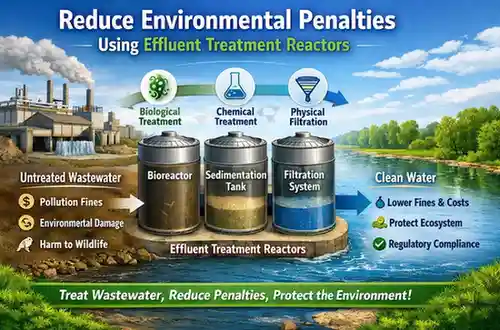
Effluent treatment reactors are specialized systems designed to treat industrial wastewater by removing contaminants, toxins, and pollutants. They are a core component of industrial pollution control systems.
These reactors use a combination of:
- Physical processes (filtration, sedimentation)
- Chemical processes (neutralization, coagulation)
- Biological processes (aerobic and anaerobic treatment)
How Effluent Treatment Reactors Reduce Environmental Penalties
1. Ensuring Regulatory Compliance
Effluent treatment systems are designed to meet strict discharge standards set by environmental authorities. By treating wastewater effectively, industries can avoid penalties and maintain compliance.
2. Minimizing Pollution Levels
Advanced reactors significantly reduce:
- Chemical Oxygen Demand (COD)
- Biological Oxygen Demand (BOD)
- Total Suspended Solids (TSS)
3. Real-Time Monitoring & Automation
Modern ESG compliance equipment includes IoT-enabled sensors and automation systems that continuously monitor wastewater quality, ensuring compliance at all times.
4. Reducing Legal and Financial Risks
By maintaining compliance, industries can avoid costly legal disputes and fines.
| Scenario | Without ETP | With ETP |
|---|---|---|
| Penalty Risk | High | Near Zero |
| Compliance Status | Uncertain | Fully Compliant |
| Operational Continuity | At Risk | Stable |
Key ETP Benefits for Industrial Businesses
Implementing effluent treatment reactors offers multiple ETP benefits beyond compliance:
- Reduced environmental impact
- Improved brand reputation
- Enhanced operational efficiency
- Lower long-term costs
Role of ESG Compliance Equipment
ESG compliance is becoming a major factor in investment decisions. Companies with strong environmental practices attract more investors and customers.
Effluent treatment reactors contribute to ESG goals by:
- Reducing carbon footprint
- Promoting water recycling
- Ensuring sustainable operations
Industrial Pollution Control Strategies
To effectively reduce environmental penalties, industries should adopt comprehensive industrial pollution control strategies:
1. Advanced Filtration Systems
Use membrane filtration technologies such as RO and UF.
2. Zero Liquid Discharge (ZLD)
Eliminate wastewater discharge completely.
3. Water Recycling Solutions
Reuse treated water to reduce consumption.
4. Automation & Monitoring
Implement smart systems for real-time compliance tracking.
Cost vs Penalty Comparison
Investing in effluent treatment reactors is often more cost-effective than paying penalties.
| Factor | Without ETP | With ETP |
|---|---|---|
| Annual Penalties | $50,000 - $500,000+ | $0 |
| Operational Risk | High | Low |
| Brand Value | Negative Impact | Positive Growth |
Industries That Benefit the Most
- Chemical manufacturing
- Pharmaceutical production
- Textile and dyeing
- Food processing
- Oil and gas
Future Trends in Environmental Compliance Systems
- AI-driven compliance monitoring
- Smart water management systems
- Decentralized treatment units
- Green and energy-efficient technologies
How to Choose the Right Effluent Treatment Reactor
- Assess wastewater characteristics
- Evaluate compliance requirements
- Consider scalability and automation
- Analyze total cost of ownership
Expert Tips:
- Invest in high-quality automation systems
- Choose scalable and modular designs
- Work with experienced suppliers
ROI of Effluent Treatment Reactors
The ROI of effluent treatment systems is driven by:
- Elimination of penalties
- Reduced water costs
- Improved operational efficiency
| Metric | Before ETP | After ETP |
|---|---|---|
| Compliance Cost | High | Optimized |
| Water Usage | 100% | Reduced by 50-70% |
| Profit Margin | Moderate | High |
Conclusion
Effluent treatment reactors are a vital investment for industries aiming to reduce environmental penalties and achieve global compliance standards. By implementing advanced environmental compliance systems, businesses can protect themselves from financial risks while promoting sustainability.
As environmental regulations become stricter worldwide, adopting modern wastewater management solutions is not just a necessity—it is a strategic advantage.
Ready to eliminate environmental risks and penalties? Invest in effluent treatment reactors today and secure long-term compliance, efficiency, and profitability.
Comments (3)